My Love Affair with Twitter

6 months ago I hated twitter… I have resisted it’s appeal for 99% of its 10 year existence. ( by the way, Happy 10th birthday Twitter!) The French song by Stromae- Carmen, summed up my criticism nicely.

I now realize that the song recounts the pitfalls of an uninformed approach to twitter,and certainly the dangers of an unguided use of any social media platform. Much like the song suggests, I thought it was an unhealthy tool for shameless self-promotion,used by the famous, to become more famous and the rich to become richer… I scoffed at it’s educational potential. I believed it caused its users to base their self worth and importance on their number of followers and that it reduced life to a popularity contest. I now realize it was a superficial understanding and that it has a much larger potential.

Several years ago, after hearing several colleagues jump onto the bandwagon, I decided to check it out. I created an account, I followed a few people and several news outlets. At first it was lackluster on my end, but I thought it was an interesting way to get real time news updates. I appreciated that it allowed for access to social movements such as the Arab Spring, the Idle No More movement and real time access to critical news such as social protests and natural disasters happening around the world. I never posted anything and used it only to consume news. It was great for that, I thought, but not much else. 140 characters allows for very little.

During previous professional developments I could not be sold on the idea of Twitter, and continued my criticism and fight against social media in general. A fight I was sure to lose. My students would not choose my methods of learning over theirs. Earlier this year, after reading and hearing George Couros extol the virtues of Twitter, I decided to invest some time, improve my profile and get to networking. At the very least, I thought it would help me understand my enemy.  

Investing time in Twitter caused a veil to be lifted from my eyes. A new world and a new language appeared before me.  I realized that many of the elements of technological literacy used by my junior high school students were a part of Twitter. From hashtags to embedded codes, from net citizenship to networking, from SMS to apps, Twitter summed up the framework for this new language; the language of social media.

Having had my head in the sand for so long, it was a steep learning curve but one that has helped me love and get excited about teaching and connecting with students again. One that has allowed me to share, encourage, ask questions, find inspiration and perhaps inspire. One that has allowed me to reconnect with students at a time where I thought humanity was doomed.

It took George Couros to show me the positive side of Twitter. His advice allowed me to maximize and enhance the use of my smartphone all the while interacting with students through this powerful device and creating genuinely engaging teachable moments about digital footprints and online ethics. I couldn’t believe I had only been using my smartphone to send the odd text message for all these years!

To learn about Twitter was to become more technologically literate at the least. At best, it summed up and made use of the most recent and important developments in social media and technology from the past 10 years. It allowed me to speak and experiment with this new language. It also meant free professional development anytime, anywhere. The upside seemed appetizing, so I dug in.

The criticism of Twitter is still strong among my colleagues, but I now I believe resistance is futile. We can struggle against it, or we can embrace the change. While living as a monk in Thailand, I was told that when facing the winds of change, it was better to bend like a flexible blade of grass then to stand rigid as a tall tree in the field of life, as the tree could too easily break or be uprooted. In this instance, in this battle, I felt the wind pulling at my roots. I now choose to be flexible. My focus has changed from opposer to embracer.  

As a teacher in 2016, in a globalized world, one where communication takes place as much online as it does offline, perhaps increasingly the former, Twitter has become a force to be reckoned with. And I now stand ready for the reckoning. The wave is washing ashore, our students were born in an era of high speed internet, smartphones and speaking a language and using tools that were becoming unfamiliar to me. Their future will involve this language whether I speak it or not, whether I like it or not.

Furthering my interest in this phenomenon, I followed a student’s invitation to join Instagram. Much like Twitter, it has been a big eye opener as well. I have seen it live as a kind of Jr. Twitter. Or a Twitter for kids. Its format is simpler, and perhaps focuses on photography and visual arts which adds to its appeal for younger users. Both platforms have allowed me to reconnect with students, on a level I did not think possible.  It has shrunk the generation gap that I was experiencing years before. It has given me a voice with younger learners and I do not regret moving towards this integration. School can be cool and fun and new and enticing again. Even at my age. All you need is a smartphone. Students love teaching me how to use it.

During our last session with George Couros, I was excited to see that many concepts I had learned through Twitter would be transferable and would integrate nicely with another love of mine:  blogs….

The learning continues…

And in the words of my favorite rapper:“Le combat continue….”

Thank you George.    Thank you #winnipegsdItll.    Thank you Twitter.

M Stéphane Gautron

Enseignant – École Sacré-Coeur

cluster 1965
Further Reflections

When reading George Couros’ book, I was especially captivated by his thoughts on innovative leadership and his focus on facilitating far reaching change in schools rather pockets of innovation in the odd classroom. Change that creates schools full of classrooms that are challenging, innovative and empowering for students is needed.

I believe that in order for teachers to change and improve their practise when they are already extremely busy and overtaxed with their job there a few things that need to happen.

Teachers need…

  1. Support from administration
  2. A professional/mentoring relationship with an innovative leader
  3. Patience (real and lasting change can be slow)
  4. opportunities to collaborate with other innovative teachers
  5. reflection time

Georgia Wells, Children of the Earth

One Step at a Time

For the last month I have procrastinated writing this blog post. To be completely honest it scares me. What if I say the wrong thing? What if I miss a typo? What if I say something and it’s misinterpreted? These thoughts, as well as about fifty other “what ifs”, left me feeling very anxious about this post. I had the same feeling of dread about Twitter a month ago.  One of the first posts I saw when I opened my Twitter account was a retweet by Shauna Cornwell of something George Couros said, “when it comes to being innovative- to start…change one thing, not everything”. When I read that, all of the sudden Twitter became a lot less overwhelming. It reminded me that I don’t need to master Twitter overnight nor would anyone expect that. I decided I would start by opening Twitter and doing at least one tweet or retweet everyday. It’s been a few weeks since then and I have to admit that Twitter has grown on me. It’s a great way to network with others and I’m being exposed to things that I never even knew existed like “Genius Hour”. I’m so glad that I did not let my fear paralyze me because I would’ve missed out on a lot of great learning.

As I read and reread the last paragraph to make sure I haven’t accidently written any obscenities I am reminded of advice that my support teacher gave me in my first year of teaching –jump in and thrash around. I have used that mantra with so many things, like trying play based learning and as long as I take the time to reflect afterwards it never fails me. As I think about what having an innovators mindset is I have realized that being willing to “jump in and thrash around” is the first step.


Carrie Wood

Gr.1/2/3 Multi-Age Teacher

John M. King School

The Innovator’s Mindset

To be honest, I had a really hard time thinking about what I was going to write about for this blog. After our March session with George Couros, I left there feeling frustrated and confused. I guess I was expecting it to be heavily focused on technology in the classroom and it wasn’t. I should have gone in with a different mindset.

So I thought long and hard about what did resonate with me that day and it was the idea of whether or not I would want to be a learner in my own classroom? I thought about that for awhile and I’m happy to say YES! I am very open and honest with my students so they can see me as a learner too. They know that I don’t have all the answers to their questions and that I’m not the best speller in the world but that doesn’t stop me from trying my best and taking risks. I feel that my students have a lot of say as to the learning that goes on in our classroom and that they have a voice. I try and make our classroom as comfortable and inviting as possible with many different types of workspaces around the room for students to use. Everything in our classroom is communal. My students know that they can learn from each other and that they are teachers too!

I feel that what goes on in my classroom is very different from what I grew up with and that if I had the opportunity to be in a classroom like mine, I would have enjoyed school a whole lot more and would have been more successful at it.

 Shayla Solomon

Lord Selkirk School

Cluster 1965

Creating a Culture of Innovation

“If we want to create a culture of innovation, we must first focus on furthering our own learning and growth.”  George Courus
So here I am, writing my first blog -which shouldn’t be that hard for me because I always have lots to say 🙂  But here I am the night before our next session, trying to put into words what this whole “innovation mindset” opportunity has done for me so far.
First off, I was thrilled to have been chosen to be one of the leaders with a colleague and friend from my school 🙂 I didn’t know much about it until I got the book and started reading. I was hooked right away, as it was just the kind of new direction I was looking for. I had been feeling that I was missing something in my teaching and in my classroom and I was searching for something different to bring to my learners. So this opportunity came at the perfect time for me.
Relationships, relationships, relationships are definitely something I have always felt are so important to develop with my learners and the people I work with.  I realize now that is a good start, but I need to now use that to my advantage to empower them. The part about engagement and empowerment was an “aha moment” for me.  I was spending too much time trying to engage them instead of giving them the reins to be empowered.  That being said I saw what empowerment can really do just last week 🙂
I had been putting off using ipads in my classroom as I wasn’t quite sure how I wanted to use them in my classroom. But last week I decided to sign out our ipads from the library (we share 4 between 3 classrooms).  I still wasn’t exactly sure what I was going to do with them but I wasn’t waiting any longer to jump in.  I have to say I was blown away with what my students came up with, with not much help from me:)
I have one learner in my class who is probably one of the most energetic, creative kids I have ever met. He builds all kinds of cool things with whatever he finds in the classroom. He is obsessed with coding and Lego and he comes up with the most imaginative stories … but he has extreme difficulty writing anything down on paper. I have to come up with other ways to assess his learning and he isn’t always cooperative.  So he saw the ipads on my desk and ask if he could use one. I asked him what he wanted to use it for. He said he wanted to make a video with his classmate. I said sure … make a video.
Well … he made a video all right. I few of them, and even one for me because it was my birthday. He used the Stikbot app and had these little Stikbot figures and it  was so amazing.  At that moment “I got it” as I watched him so proud of his work and how eager he was to show myself and all his peers. (I also showed numerous teachers in the staffroom over lunch hour the cool things my kids came up with, because I was proud of them too).
So I am rambling here, but it was a really great day in my classroom for students to feel empowered. I have known him since grade 2 and he is now in grade 6 and he has come so far 🙂  There were other learners that did some great work on the ipads as well, on apps they had never used before too. Math videos about patterning using explain everything and an iMovie thriller. The energy in the room was so positive and contagious. I wish I would have had more ipads to go around.
Well my students have definitely inspired me to keep learning more about technology and not to be afraid to just jump in and learn together. They are teaching me so much!
I am exciting for this journey, and it has only just begun. Thank you for this opportunity. I am looking forward to learning and growing and sharing with my colleagues.
As for twitter … still a work in progress 🙂
Michele Hallson
Grade 6 at Sister MacNamara
Cluster 1965

Fear No More

As much as I have strived for innovation and to foster passion and creativity within the classroom setting, it has always been countered with a bit of caution. You see, when I was in University I took a course entitled “Educator and the Law”, in retrospect it should have been called “How to Get Fired and Sued in Three Easy Steps”. The premise of the class was to look into case files and situations where educators had either been fired, suspended or sued and hopefully we would learn from their mistakes. This class set a tone of fear and a self-preservation in me that has unfortunately has carried forward into my teaching. It was instilled in us over and over to use Social Media as little as possible once we became educators. At no time did they showcase the possibilities of positive relationships, communities and resources it could open up for us.
I was a later addition to the ITLL list and as such didn’t receive George’s book (and still haven’t yet). So despite “Googling” his name and reading a few interviews prior, I didn’t really know what to expect when I walked into Room 106. After my University experience, you can imagine my surprise when I was greeted by an educator and administrator who not only valued the tools of Social Media, but rather encouraged them. The simplistic message of “if you wouldn’t say or display it in your classroom, don’t put it on your Twitter” was revolutionary for me.
That day I set up a Twitter account using my actual name, a first for me since entering the world of education. What resulted was a whirlwind of connections and resources at the touch of a fingertip. I posted a photo of the Steel Pans the students in our school were going to be performing on later that week accompanied by some hashtags that made sense to go with them. Almost instantly the photo was “liked” by a group in the UK, who’s videos I had used initially to introduce the students to the instrument. For the students it felt like we had come full circle, having a group that we respected and learned from appreciating the hard work and dedication that they had put in to learning the skills of the pan.
Innovation is not defined by technology alone and tools are only as good as they are being used, but it was like George Couros gave me the key to a door filled of devices that had previously been locked with the words “do not enter” on it.
Charlotte Cook-Dowsett
Lord Selkirk School
Cluster 1965

Inspired Educators

I have put off writing this blog post, because I simply couldn’t think of a way to put my feelings about the March PD session with George Couros into words.  I left that day feeling inspired and full of passion about learning and teaching.  I remember thinking how thankful I was to have been chosen for this project.  Leading up to the March PD session, I was unsure about what it was really about, although I knew it had something to do with Twitter.  I was excited about potentially learning more about bringing technology into the classroom, as it was something I was already interested in.  As the day went on, I became increasingly interested; you might even say “hooked” on George’s ideas about innovation.  I knew that if I were this passionate, it would cross over into my students’ learning as well.  I immediately began thinking of ways to kick it up a notch!

The evening of our first PD session, I couldn’t take my eyes off my Twitter feed.  I had no idea there were so many resources and ideas at my fingertips!  I continued using Twitter for my own professional development, and really enjoy sharing thoughts and pictures of what we’re doing in our classroom.  I now understand the power of Twitter.

In terms of innovation in the classroom, I have been thinking of ways to incorporate technology and devices that my students are already familiar with, to further their learning about different subject areas.  In the last couple weeks, one of the projects we have been working on has been Geocaching.  This involved using GPS units, creating a cache of our own (which is essentially like hidden treasure), entering the coordinates and information online, and tracking to see who visits our geocache.  My students decided the best place to hide ours would be near the Community Centre, because it is one of their favourite places in the community!  I have loved the excitement on their faces when it’s Geocaching time, and enjoy bringing a new piece of technology into their lives, GPS units!!

I can’t wait to continue this journey with George, and all the inspiring educators I have met through this project, and Twitter!


Teal Moszynski

Norquay School

Cluster 1965

ITLL Blog Post

I went into the first session with George Couros with an open mind – not knowing what to expect but looking forward to learning, both with a friend and colleague from my school, and with colleagues from across the division.

As the day went on, I became more and more inspired and motivated to do more in my classroom – but I was also pleasantly surprised in my realization that I AM already providing some pretty great opportunities for my students to be innovative.

Going into the PD in March, my class (grade 3) and another class (grade 4/5) were just finishing up a project in collaboration with an Engineering student from the University of Manitoba. We were fortunate to receive a Science grant in order to work with this student. Our students were able to visit the Faculty of Engineering, see a young, future Engineer in her workspace, and create alongside her.  They then took that learning back to the school.  The students worked in groups to create structures that were to withstand both an “earthquake” and an “Angry Birds Attack”. The students were to follow criteria, which they created, in order to build a model of a Winnipeg landmark building. Every single bit of this project was student-driven.   In their groups they created plans, problem solved, adapted plans, made blue-prints, and created amazing, intricate structures. Some examples include the Human Rights Museum, The Forks Tower, Silver City Polo Park, and Hotel Fort Garry. Our Engineering mentor came to our school to visit, motivate, and give advice.  My colleague and I acted merely as supervisors. We circulated, provided supplies, reminded of criteria when necessary – but the bottom line was that our students were creating, our students were directing their learning. It was loud, it was messy, and it took a long time. There were about 43 kids in one room at once, and things were getting done! Every group finished with a well-done, thoroughly planned and executed design project. They learned what it means to be Engineers and Architects. The sense of pride and excitement was obvious. It was a great, great project.

Now, when I went into our first session with George Couros I was thinking that project was done. Spring Break was coming – what I wanted “done” by Spring Break was right on schedule. However, this session screwed up my plans…in a good way! Now it is time to somehow bring some technological pieces into this project. I don’t know exactly how yet – but I was very intrigued by the “photo a day” video. This project was such a big part of the kids’ school year – it would be great for them to be able to create their own video keepsake to remind them of their first experience as Engineers – I think I will bring that to the table and set them loose with the iPads!

I am not the most tech-savvy person – but I am looking forward to becoming more aware of what is out there. I never, ever thought that I would have a Twitter account. To be honest, I have not used it a lot since our first session – but now with this idea to extend the learning from this project, I believe I will reach out to the Twitter-verse and find out just how to use that photo a day app – or something along those lines – I’m still learning. J

Leslie Marnoch

Sister MacNamara

SchoolCluster 1965


Inspired & Refreshed…

I left the March session with George feeling inspired and refreshed, two things all teachers need this time of year. Here are three reasons why I felt so inspired and refreshed, and why this was a PD day that I’ll never forget.

Literacy. George reaffirmed to me that literacy isn’t just reading and writing. It is communicating! We all have students who struggle to read and write, and sometimes it feels like we’re trying the same things and expecting growth, expecting a different result. The student created videos that George shared with us, along with the story he shared about his father learning to read and write English using Facebook, showed me another more powerful way to help me teach literacy to my struggling students.

Cursive writing. George’s commentary on how cursive writing is important to some parents but just not as important in today’s age really resonated with me. This is the idea that education is changing in such a profound way, and that change is coming soon! As educators we don’t teach certain things because they aren’t important to us. This can not be an excuse any more. We owe it to our students to be the “guinea pigs” in learning about how to utilize social media for greater purposes, in order to truly help our students become innovators. We must constantly be learning, and finding ways to teach skills to kids that will be important to them in their future. You don’t have to grow up with something to be confident in teaching it!

Practical. The most influential PDs are those that give teachers strategies and ideas to implement into their teaching the very next day. The ideas George shared with us about how to engage students, and facilitate and celebrate their learning were very useful and as I mentioned earlier, inspiring. From Twitter to Google Forums to videos, to social media safety, there were dozens of ideas where a teacher could “jump in” with the very next day of school.

I went back to work the next day with some different ideas of what it means to engage students, and what it is going to take for teachers to prepare them for their future. I am excited that I will also be joining them on this journey, and for what I will learn next.


Dan Bohemier

Norquay School

Cluster 1965

ITLL Blog Post #1

I am a teacher who wants to create relevant learning experiences for my students.

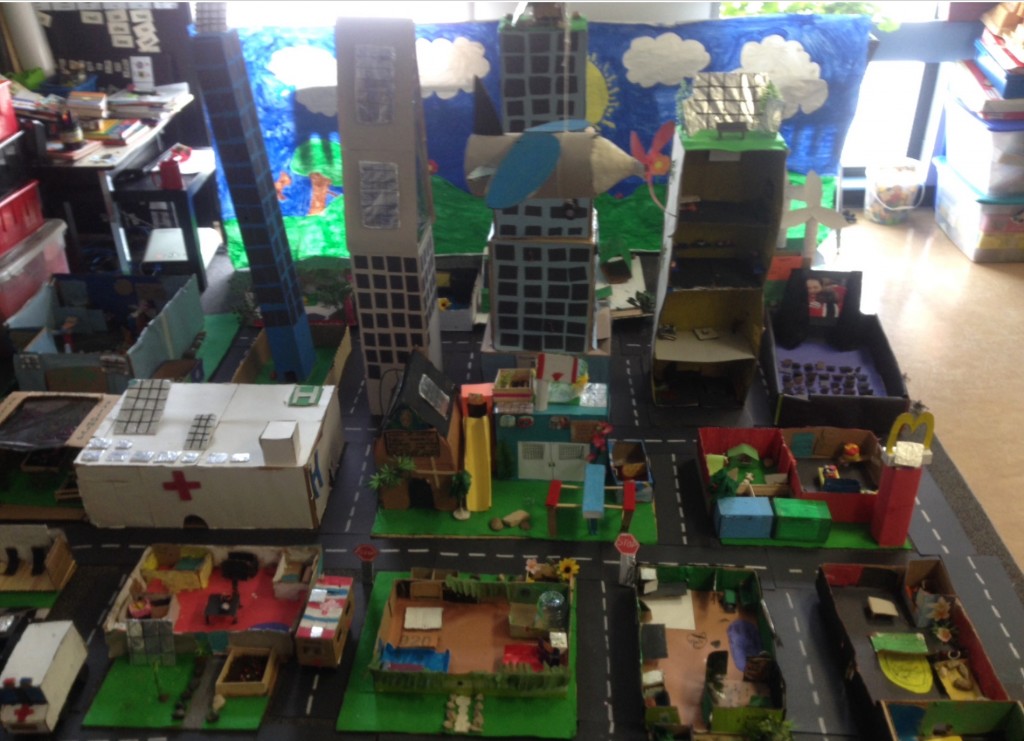
Kids are naturally curious and I want to respond to their natural curiosity as often as I can and as best I can. When I began planning my unit on ‘Materials and Structures’, I looked for ways to make the learning come alive for my students. My goal was to create hands on learning activities and I wanted them to be involved and engaged in the learning experience. I wanted them to connect their learning to their own communities and homes to make it relevant and meaningful. I remembered a project that two highly innovative teachers at Churchill High School did with their grade 7 Flexible Learning students. The project was called ‘Sustainable City’ and it was based on research that was focused on ways a city can integrate sustainability into communities.

I knew that my grade 3 / 4 students could handle this type of project and decided to integrate sustainability into the ‘Materials and Structures’ unit as well. We would create our own ‘Futuristic Sustainable City’ – we could do this! We learned about renewable and non-renewable resources. I had a guest speaker come in and talk about urban gardening and structures and houses that were made out of recyclable materials such as tires, bottles, etc. After the research was finished we planned our city and went to work. The kids, for the most part, worked in pairs and each pair built a section of our futuristic sustainable city. Students built skyscrapers, houses, a hospital, bank, police station, airport, school, McDonalds, theater and many other buildings you would find in a city.

The finished product was awesome and the students were extremely proud of their accomplishments! We displayed our city for parents during Student Lead Conferences and students were able to share what they learned throughout the project. When students are highly engaged in the learning process amazing things happen for them. They were excited about their learning every day of the month and a half that we worked together. Every day new ideas emerged and were incorporated into projects. Every day my students couldn’t wait to build their structures. I tweeted my ‘Sustainable City’ project so other teachers might be inspired to build their own city with their students.

image
Erin Dahin
Wellington School
Cluster 1965